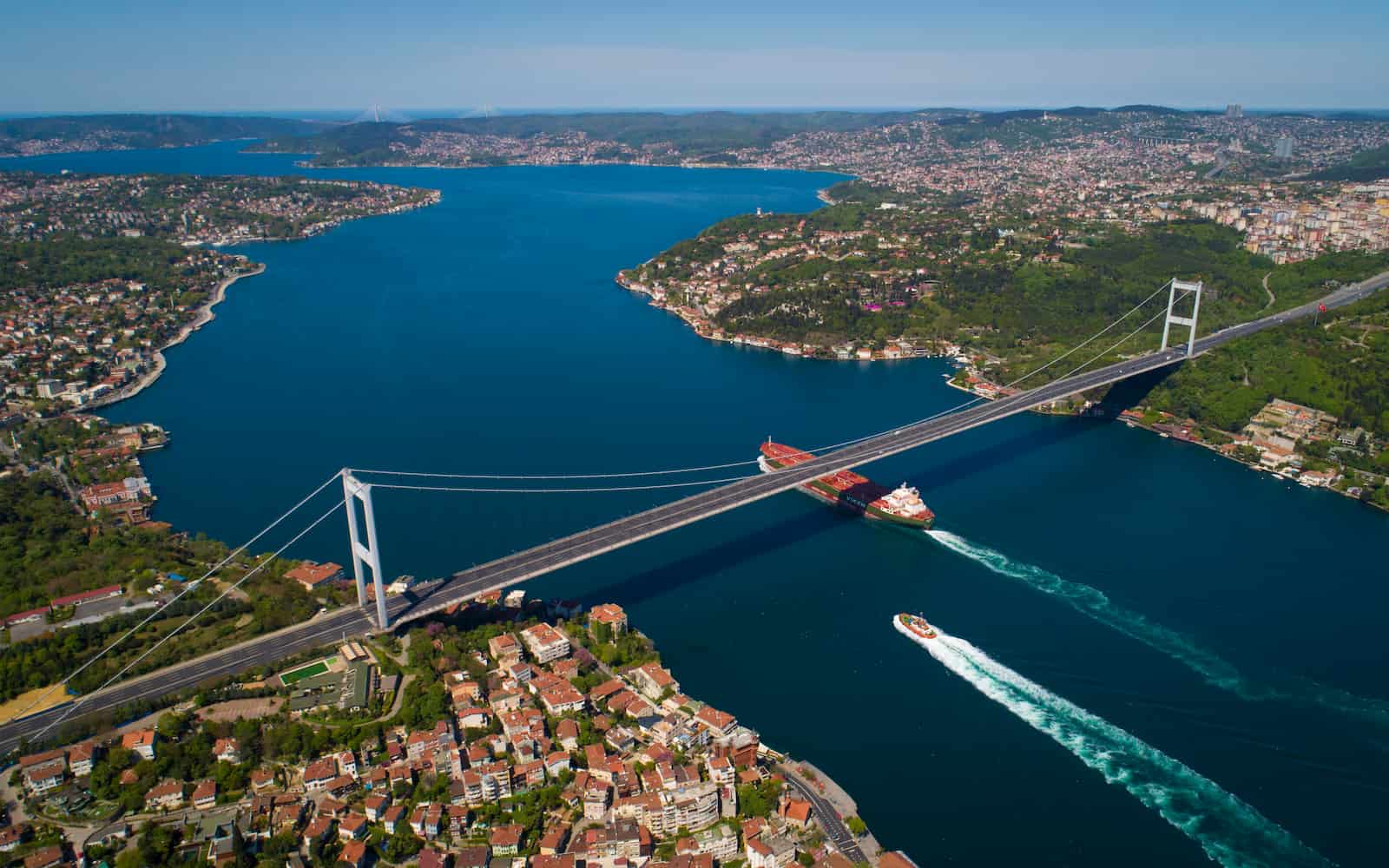



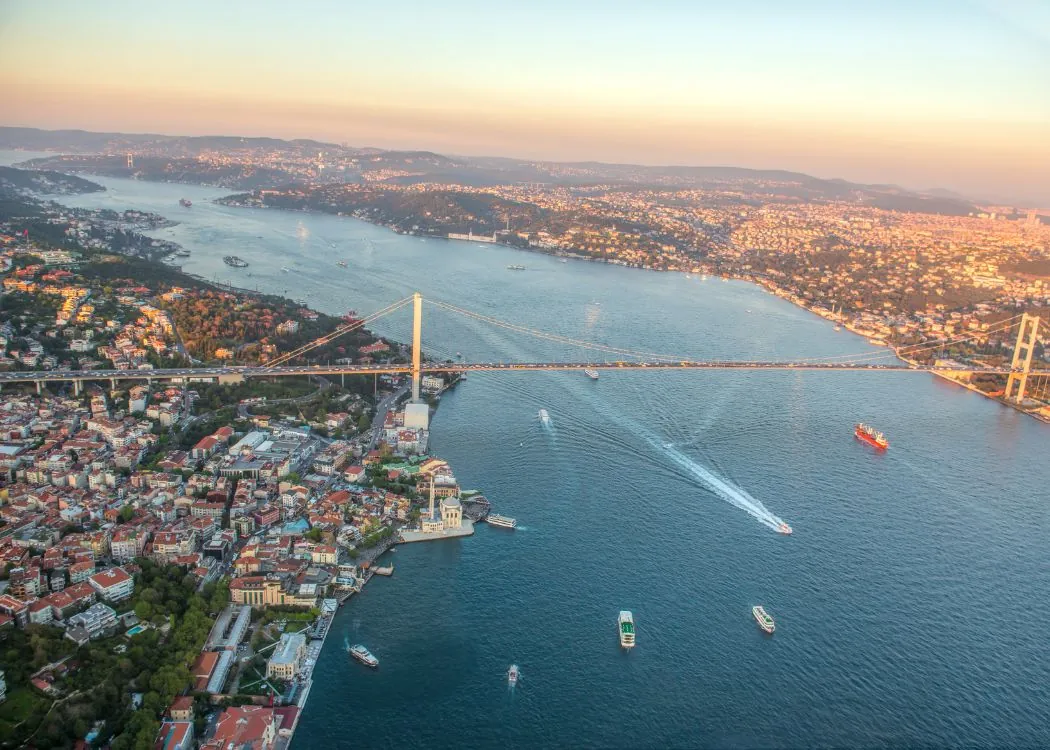
To understand how this modern scene came to be, we need to rewind many centuries. The settlement once called Byzantion became Constantinople under Roman rule and later evolved into Istanbul under the Ottomans. Each era left layers of culture, faith, and architecture that still shape what you see today. In the sections that follow, we will walk through those turning points so the next time you cross the Bosphorus, you can picture the stories below the surface.
Byzantion: The First Settlement in Istanbul
Greek colonists from the city-state of Megara arrived on the Bosporus in the seventh century BCE. Legend says their leader, Byzas, chose the triangular promontory because ships could slip from the Sea of Marmara into the Golden Horn and sit safe from storms. They called the new town Byzantion (Latinized as Byzantium) and set up a modest marketplace, a small acropolis on today’s Seraglio Point, and wooden quays for Black Sea grain and Aegean wine.
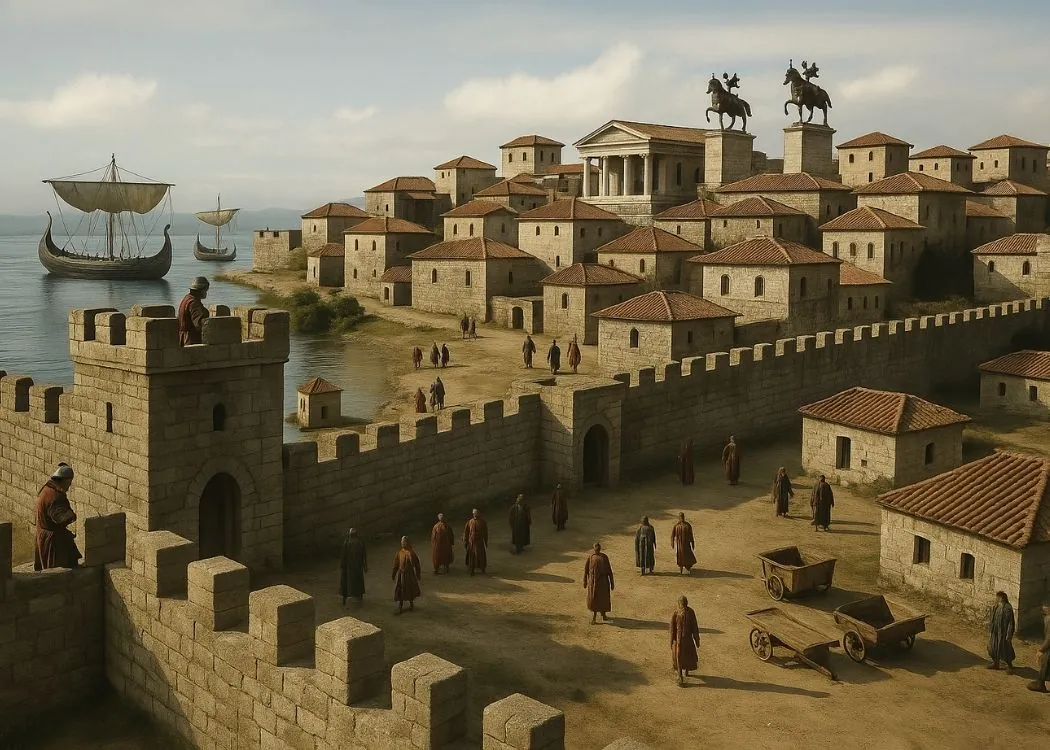
Geography did most of the early advertising. The Golden Horn formed a deep, sheltered inlet, while the narrow strait beside it let merchants tax any vessel moving between Europe and Asia. Within a few generations the settlement was exporting salted fish, collecting customs duties, and minting its own coins. Even when Persia seized the town during Darius I’s Scythian campaign, traders kept working the same piers because no other harbor along the strait offered equal protection.
Byzantion’s fortunes rose and fell with the power struggles around it. The city paid tribute to one empire, then another, yet it kept its walls strong and its treasury fuller than most rivals. That stubborn survival is why Constantine the Great will look here centuries later when he needs a fresh capital. First, though, the small Greek port must weather Roman expansion and that is the next step in our story.
Constantinople and the Roman Dream
Constantine the Great won control of the Eastern Empire in 324 CE and looked for a fresh stage for his power. He chose the modest port of Byzantion, renamed it Nova Roma at first, and formally dedicated the new capital on May 11, 330. Locals and travelers soon called the city Constantinople, the city of Constantine, because the emperor filled it with symbols of imperial pride. He brought senators from Italy, opened grain shipments from Egypt, and mapped the streets into fourteen districts, echoing the layout of old Rome.
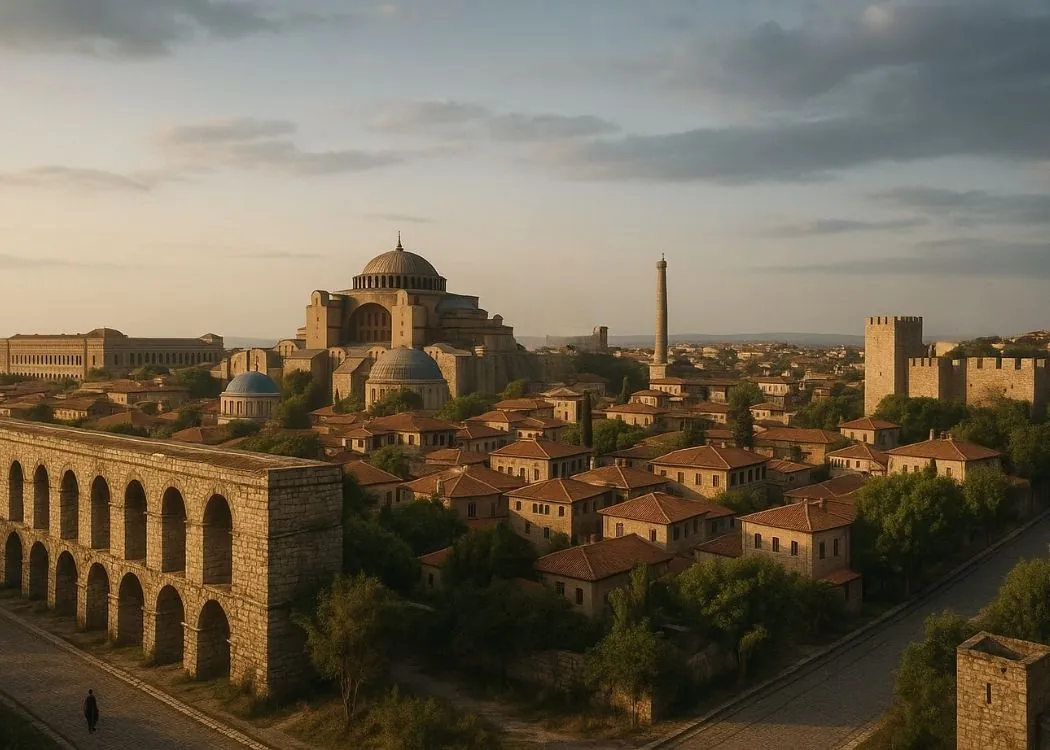
Building came fast. Constantine ordered new land and sea walls to ring the promontory, then expanded an ancient racecourse into the huge Hippodrome, linked directly to his Great Palace where the Blue Mosque stands today. Rows of statues, an imperial box, and granite spina monuments copied the Circus Maximus in Rome. Early churches rose beside the palace, and by 360 the first Hagia Sophia stood as the city’s cathedral, its timber roof already hinting at the stone marvel Justinian will erect two centuries later. These monuments turned a trading outpost into a marble showcase.
Within a generation Constantinople had grown into the beating heart of the eastern Mediterranean. Latin titles ruled its courts, Greek merchants packed its quays, and scholars copied texts for libraries that rivaled Alexandria. When old Rome faltered in the fifth century, this newer Rome kept the empire’s laws, taxes, and faith alive. Its strength, and its thick stone walls, will help the city face the sieges and crises that mark the next chapter of its story.
From Zenith to Twilight: Constantinople’s Changing Fortunes
Istanbul’s story moves fastest in the thousand years after Constantine. The city glows, stumbles, and finally yields to a new power. Below, three linked snapshots trace that dramatic arc and show how each age prepares the ground for the next.
The Golden Age of Byzantium
Justinian I rules from 527 to 565 and wants his capital to dazzle. Taxes from Egypt and Syria pay for bold projects. The new Hagia Sophia opens in 537 with a dome so wide that visitors think it hangs from heaven. Mosaics cover palaces, law students copy the emperor’s Corpus Juris Civilis, and silks arrive from the Far East by caravan and ship.
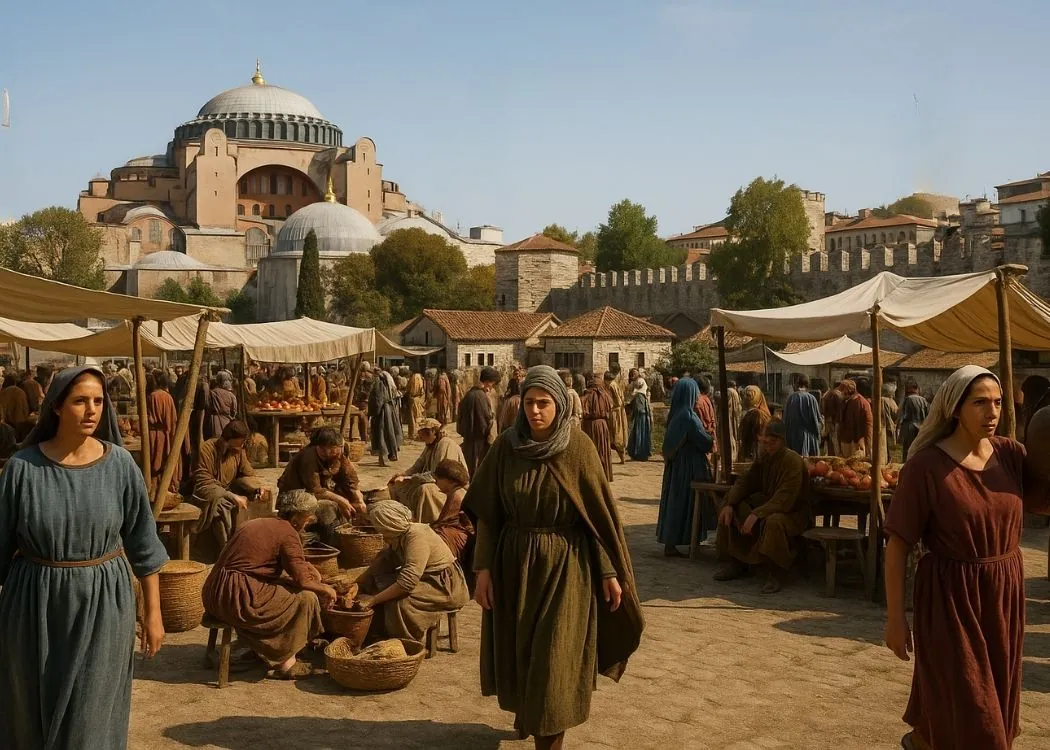
Trade fills the ports, scholars fill the libraries, and the city’s double walls stand firm. Constantinople becomes the lighthouse of Orthodox faith and Greek learning while the rest of Europe slips into early medieval darkness.
Storms at the Gates
Fortunes turn in the seventh century. Arab fleets test the sea walls, Slavic tribes raid the countryside, and a first pandemic of plague thins the streets. The city survives, but each siege drains coffers and people.
The deepest wound comes in 1204 when the Fourth Crusade diverts here. Latin knights breach the walls, loot icons, and set fires that scar neighborhoods for decades. A fragile Latin Empire rules until 1261, yet never repairs what it burns. Byzantium returns but smaller, poorer, and surrounded by rising Turkish beyliks in Anatolia. By the early fifteenth century only the core of the old peninsula remains under imperial control.
1453: Mehmet II Takes the City
Sultan Mehmet II, just twenty-one, orders a final campaign in April 1453. Massive bronze cannons pound the Theodosian Walls day and night. Genoese ships try to block the Golden Horn with a chain, yet the Ottomans drag their own vessels across Galata hill to outflank the barrier.
On May 29 the last gate falls. The young sultan rides to Hagia Sophia, prays, and converts the great church into an imperial mosque. He renames the city Istanbul in official records and invites craftsmen, merchants, and scholars from across his empire to repopulate the streets. A new era has begun, but the memory of Byzantine grandeur still lingers in every marble fragment and hidden mosaic.
Empire to Republic: Istanbul Reinvented
Istanbul changed more between the fifteenth and twentieth centuries than in any period before. The Ottomans made it the seat of a vast empire. Reformers then tried to pull that empire toward modern life. Finally, the Turkish Republic turned the city into a fast-growing metropolis that kept pressing outward in every direction.
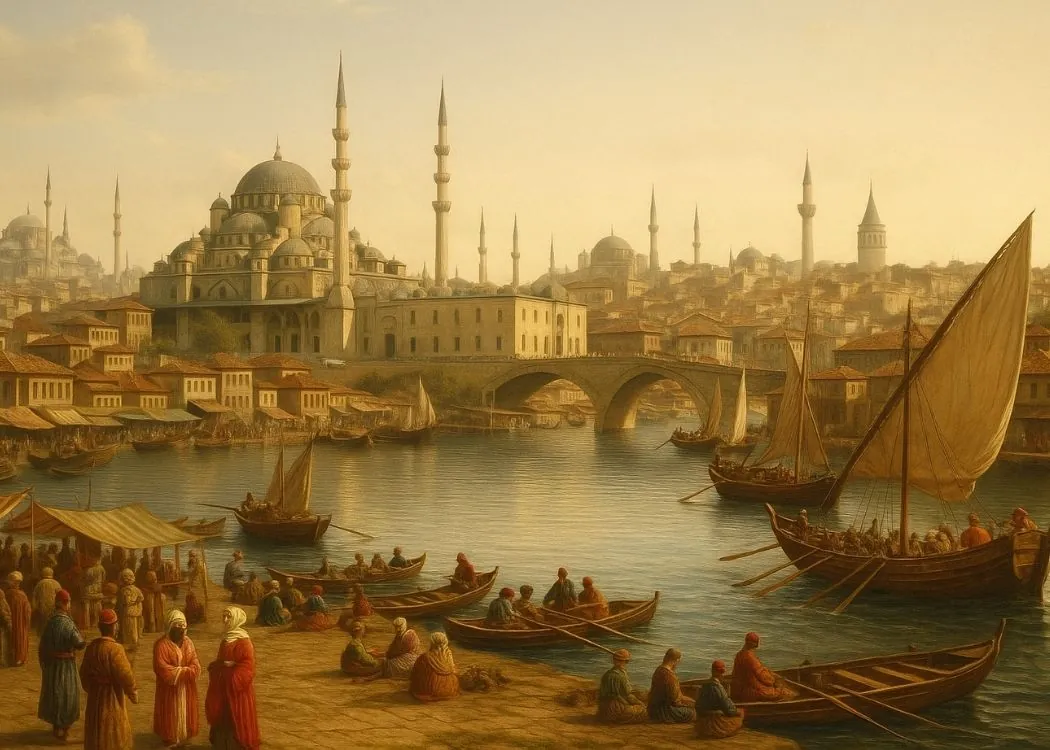
Ottoman Glory and Global Exchange
Sultans after Mehmet II filled the skyline with stone. The Süleymaniye Mosque crowned one hill. The Grand Bazaar became a maze of spices, silks, and jewels that drew traders from Venice to Samarkand. Court architects mixed Arabic calligraphy with Byzantine domes and built hundreds of fountains so the whole city hummed with water. Diplomats arrived from Europe, North Africa, and Persia because imperial edicts and trade routes all began here.
Reform, Railways, and Upheaval
By the early nineteenth century the empire lagged behind Europe’s factories and armies. Tanzimat ministers issued new laws, opened secular schools, and laid telegraph lines. The Orient Express steamed into Sirkeci Station in 1883, shrinking the journey from Paris to a single week. Yet modern uniforms and Western ideas stirred unrest. Revolts on the Balkan frontier and rival political clubs in the capital weakened the palace’s grip and set the stage for radical change.
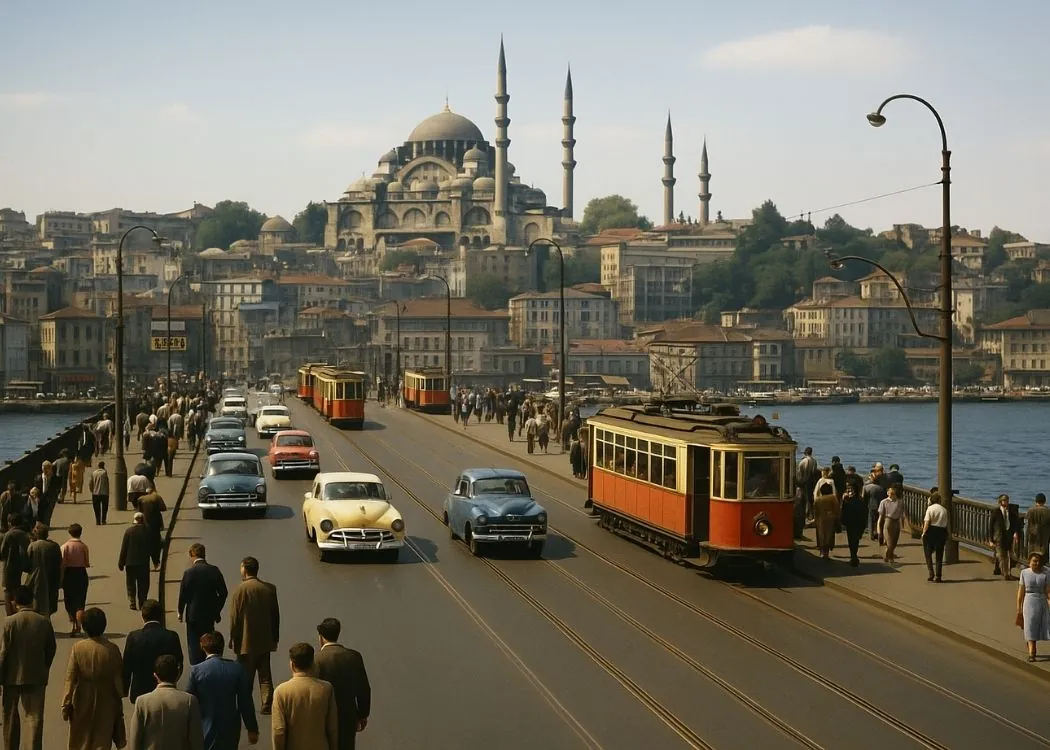
Republic Rise and Urban Boom
The Ottoman era ended in 1922, and a year later the Republic of Türkiye was born. Ankara became the new capital, but Istanbul stayed the country’s cultural magnet. Population doubled in the 1950s as rural families moved in for factory work. Car ferries and the 1973 Bosphorus Bridge stitched Europe and Asia together. New districts climbed every hillside, and concrete towers replaced many old wooden houses. Today you can still sip coffee under a sixteenth-century dome, but a light-rail train may glide past the door.
Istanbul in 2025
The city is having a fresh growth spurt. Tech is the loudest engine: almost three-quarters of Türkiye’s start-ups base themselves here, from fintech apps to gaming studios, and the big “Take-Off Istanbul 2025” summit has already opened pre-registration for founders hunting global capital.
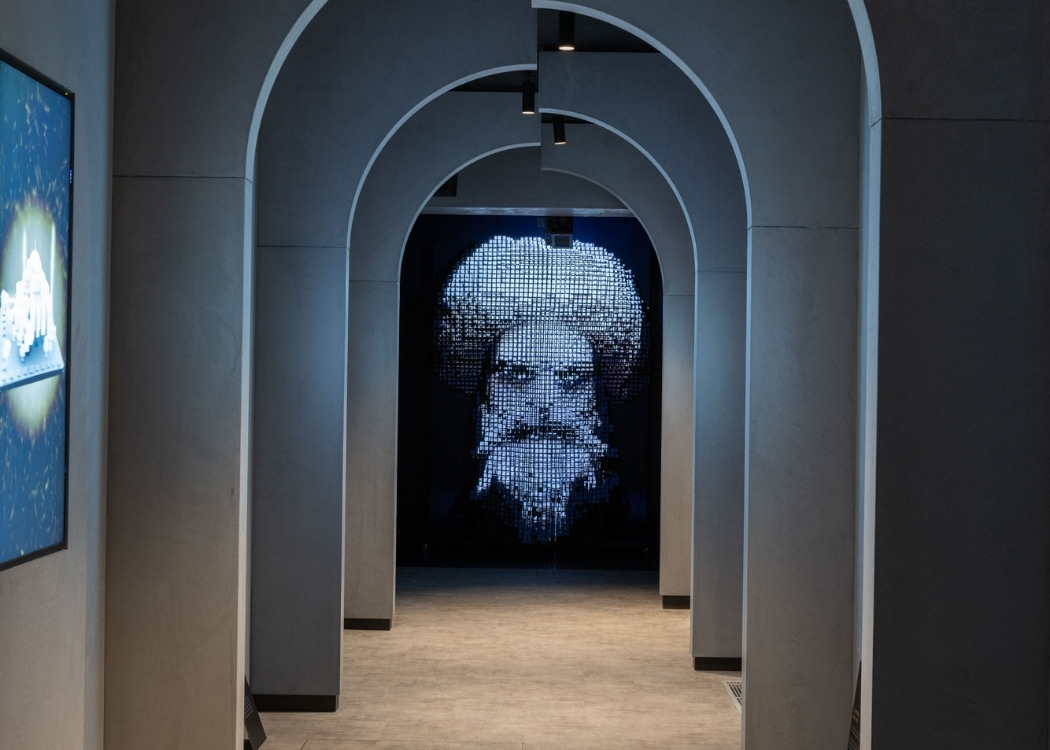
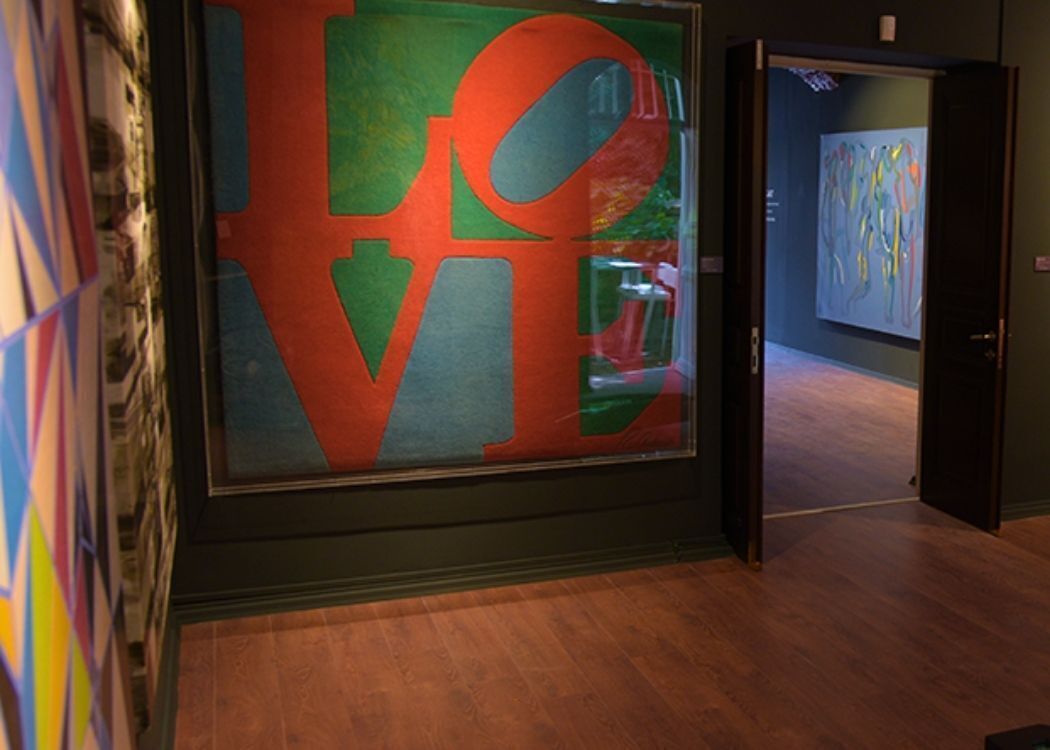
Culture keeps pace. Renzo Piano’s glass-lined Istanbul Modern reopened on the Karaköy waterfront in 2023, while the reinvented Galataport next door has turned a closed dock into a promenade of museums, cafés, and design stores that stay busy long after cruise ships depart.
Public spaces are livelier too. The Atatürk Cultural Center hosts nightly concerts under its red-brick dome, and the M11 airport metro, fully extended to Gayrettepe in January 2024, now delivers visitors from the runway to the city center in half an hour.
With restorations such as the mosaic-covered Chora (Kariye) Mosque reopening in 2024 and new bike lanes tracing the Golden Horn, Istanbul in 2025 feels both younger and older at once, proof that every century it finds another way to reinvent itself.
| Era | Place | Why It Matters |
|---|---|---|
| Greek Colony | Archaeological Museums, Sarayburnu | Marble reliefs and coins from ancient Byzantion tell how the tiny trading post began. |
| Roman / Early Byzantine | Hippodrome (Sultanahmet Square) | Obelisks, the Serpent Column, and paving stones where chariots once thundered. |
| Justinian’s Zenith | Hagia Sophia | The 537-built dome that defined Orthodox worship for a millennium. |
| Middle Byzantine | Theodosian Land Walls | Fourteen kilometres of brick and limestone that defied armies for 1,000 years. |
| Late Byzantine | Chora (Kariye) Mosque | Dazzling 14th-century mosaics and frescoes, freshly revealed after a four-year restoration. |
| Ottoman Conquest | Topkapı Palace | Mehmet II’s seat of power; treasury and harem rooms overlook the Bosphorus. |
| Classical Ottoman | Süleymaniye Mosque | Sinan’s masterpiece, where giant buttresses hide inside the walls. |
| Tanzimat Reform | Dolmabahçe Palace | Crystal chandeliers and the hall where the empire flirted with European styles. |
| Early Republic | Galata Bridge | Walk from the old city to Beyoğlu and watch anglers, trams, and ferries weave together. |
| Modern Revival | Istanbul Modern & Galataport | Contemporary art in a sleek Renzo Piano shell beside a once-silent quay. |
Explore with Istanbul Tourist Pass®
Travel light, scan once, and walk straight in. The fully digital Istanbul Tourist Pass® unlocks skip-the-ticket-line entry to more than 100 attractions, including the Hagia Sophia, Topkapı Palace, Basilica Cistern, and Dolmabahçe Palace, all with audio guides delivered to your phone. One QR code covers guided tours, museums, and even airport transfers, so you move from site to site without digging for cash or paper tickets.
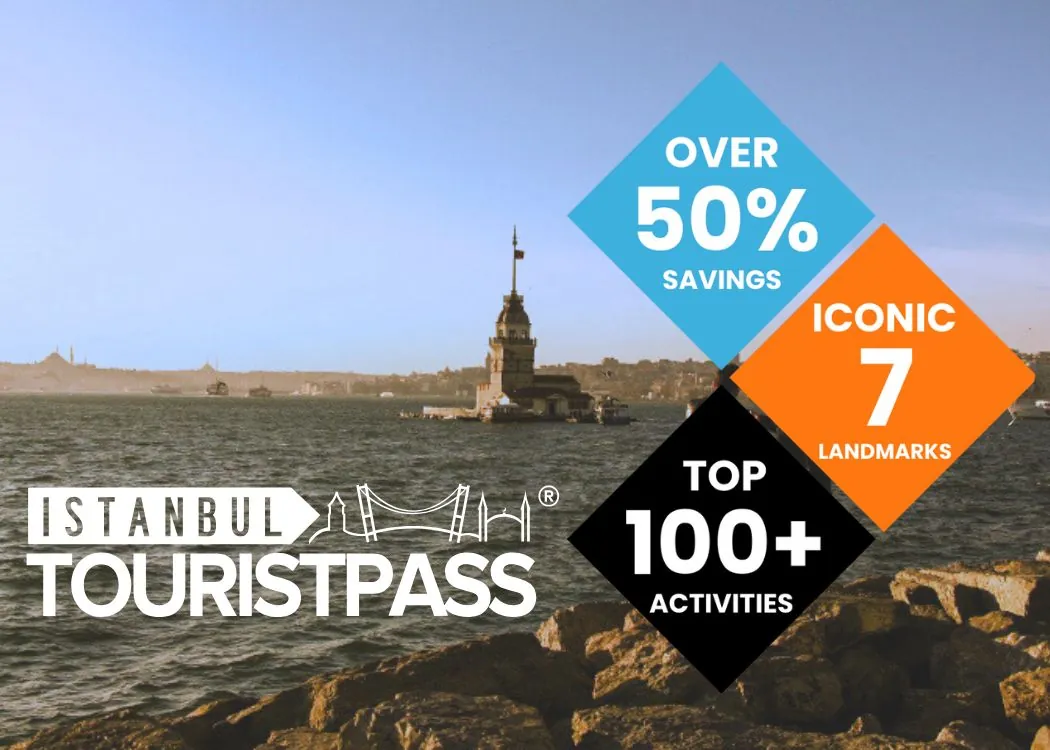
The pass also bundles Bosphorus cruises, family parks like Vialand, and live chat support. Choose a validity of one to ten days and save up to half the cost of buying tickets separately while keeping every plan flexible. Purchase takes two minutes, the app shows real-time schedules, and you start exploring the city’s full timeline the moment you land.