



Tea is more than a drink here; it is a gentle invitation to slow down and look around. A shopkeeper will wave you in for “bir çay” as you bargain for spices. Families keep kettles quietly simmering so every guest feels welcome. Even after a single rich cup of Turkish coffee, most locals reach for more tea to balance the day. As you trace your Istanbul journey, along cobbled streets in Sultanahmet, through Beyoğlu’s indie cafes, or beside the shimmering Golden Horn, let each cup remind you that you are sharing a ritual that stitches daily life together across the city and the nation.
History of Turkish Tea
Tea first reached Anatolia along the old Silk Road. Merchants carried the leaves west as early as the fifth century, and the Ottoman Empire court treated the drink as a costly luxury imported from China and later Russia. Although Turkish coffee eventually stole the spotlight, tea never disappeared from palace kitchens or caravan caravans.

Serious cultivation trials began much later. In 1878 agronomists planted seeds from Japan in Bursa, yet the Marmara climate proved too dry and hot. Researchers turned their eyes to the rain-soaked Black Sea and, in 1918, botanist Ali Rıza Erten sowed experimental plots near Batumi and Rize. His success convinced lawmakers, and Parliament passed Law 407 in 1924 to promote tea agriculture in Rize Province.
Mustafa Kemal Atatürk, seeking an affordable alternative to scarce post-war coffee, ordered a Central Tea Nursery in Rize the same year. Extension officers distributed seedlings to villagers while experts tinkered with processing methods. Harvests grew quickly: the first large-scale picking came in 1938 and Turkey’s inaugural tea factory opened in Rize in 1947, laying the industrial foundation for today’s giant ÇAYKUR network.

By the 1950s a steaming glass of “çay” had become a national habit. State support and Black Sea rainfall turned tea into an everyday staple from village homes to Istanbul’s ferries. Turks now drink more tea than anyone on earth, averaging well over three kilograms per person each year: far outpacing coffee consumption.
Turkish Tea in Istanbul Life
Istanbul moves to the quiet rhythm of teaspoons tapping thin glass. At first light ferry vendors weave through commuters balancing silver trays of steaming çay. By mid-morning shopkeepers pause to share a quick sip with neighbours, and long after midnight friends linger on Beyoğlu’s sidewalks letting the last glow of the coals keep the brew hot. Turks drink more than three kilograms of tea per person every year, the highest rate on earth, so the drink feels less like a beverage and more like the city’s bloodstream.
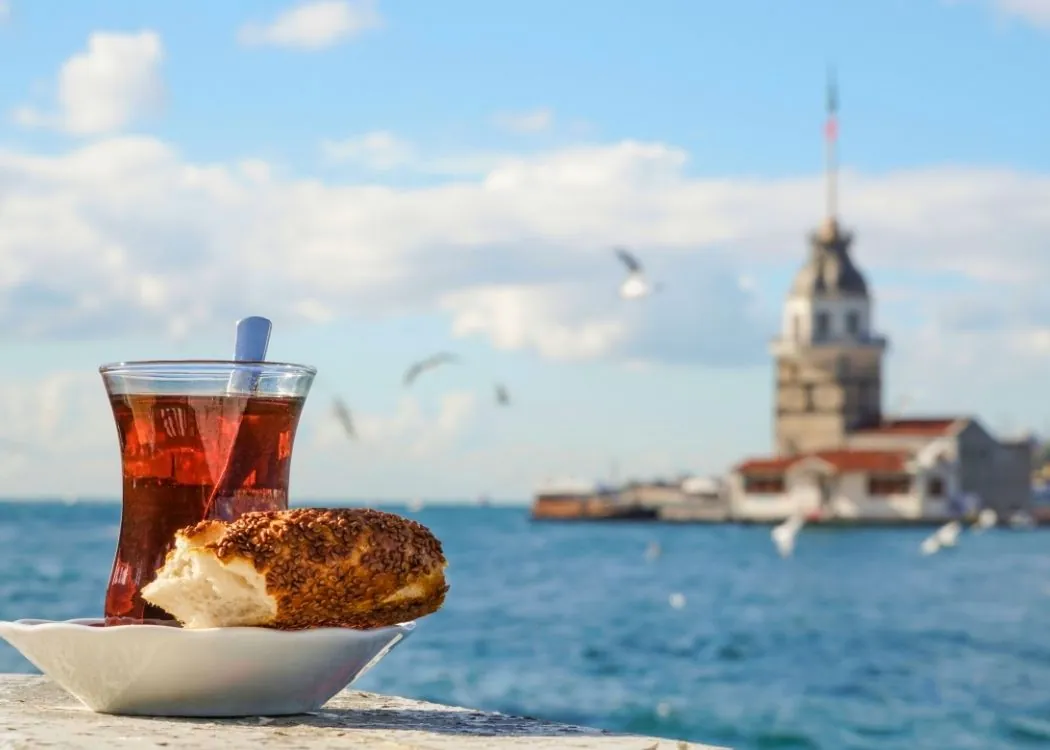
Everyday stages for a simple ritual.
Ferries and tram stops: Order a glass on the Bosphorus crossing and you will finish it just as the seagulls dive for your wake. Photographs of the tray-carrying çaycı have become icons of the city.
Grand Bazaar stalls and back-street workshops: Merchants send apprentices racing between alleys with tiny metal teapots; a deal is never final until sugar cubes hit the saucer.
Office corridors and parliament corridors alike: Law guarantees tea breaks, and a tilted spoon silently tells the server “I am full.”
Tea gardens that frame the view
Sipping tea is also about where you sit. Grab a glass at Pierre Loti Hill high above the Golden Horn, at Moda Family Tea Garden with its wide-angle Marmara panorama, or under the plane trees at Çengelköy Tarihi Çınaraltı on the Asian shore. Each spot offers backgammon clicks, salty breezes, and a view that asks you to stay a little longer.
The language of hospitality
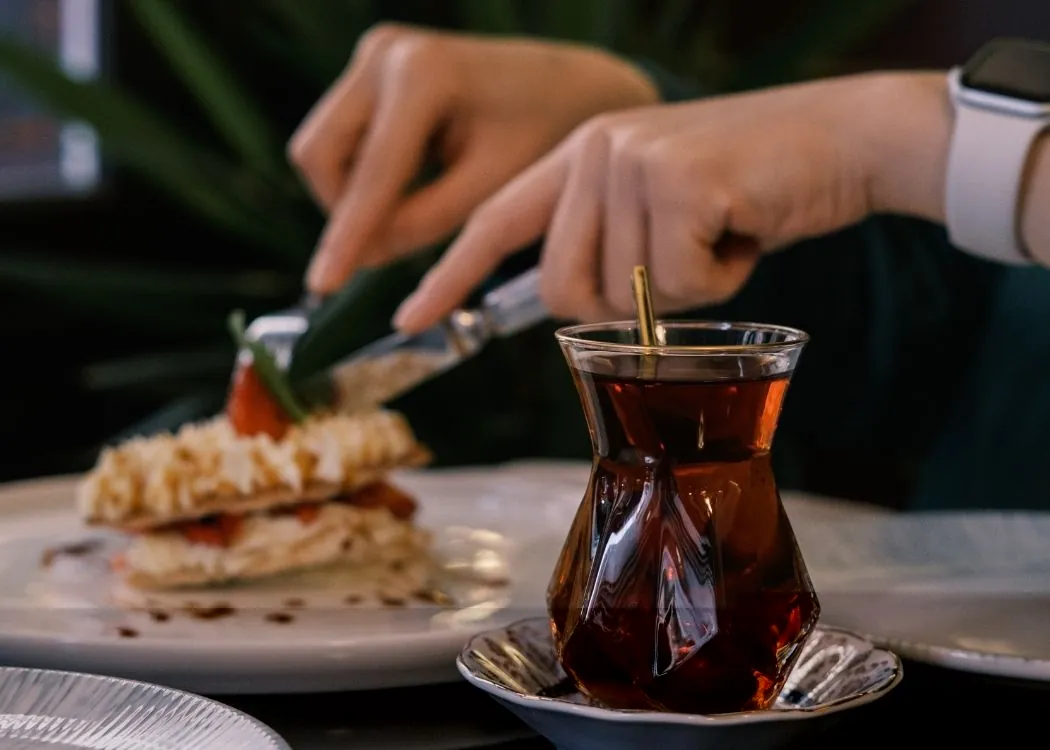
Brewing happens in a stacked çaydanlık: strong leaves steep on top, clear water boils below, and every guest chooses dark or light. Pouring that first amber stream is an unspoken welcome; refusing can feel like closing a door. Business proposals, family gossip, even parliament debates all pause for fresh tea because conversation tastes better when the glass fogs.
How to weave tea into your own journey
- Accept the first offer. Locals measure warmth by whether you say yes.
- Taste both “demli” (strong) and “açık” (lighter). You will soon know your colour.
- Watch for the spoon signal. Leave it upright for more, lay it sideways when you are done.
- Pair tea with a simit on the ferry at sunrise or baklava in a Spice Bazaar alley at dusk.
- Take home loose Rize leaves; their smoky sweetness will return you to the Bosphorus in a single breath.
Let every glass be a tiny anchor. It holds you still long enough to notice the gulls, the call to prayer, the laughter that rises from a backgammon board. That pause is the real flavour of Istanbul.

Tea Tips for First-Time Visitors
Feel free to say “no, thank you.” Hosts offer tea out of habit and kindness. A simple “Sağ ol, teşekkürler” with a smile lets them know you are grateful even if you are full.
Forget the milk. Turkish tea is served red and clear. Adding milk is not part of the custom, and most cafés will not even have it on hand.
Strong or light; your choice. Ask for “demli” if you like a deep copper colour and bold flavour, or “açık” for a paler, gentler brew. Pointing to the shade you prefer works too.
Watch the spoon signal. Leave the tiny spoon standing for another refill. Lay it flat across the rim when you are finished.
Sugar is optional. Cubes arrive on the saucer. Drop one in or bite it between sips, but never stir so hard that you clink loudly. It is polite to keep the glass quiet.
Apple tea is for tourists. Locals rarely drink the sweet, powdered apple version. If you want to blend in, stick to classic Black Sea leaves.
Expect glass, not mugs. Tea comes in small, tulip-shaped glasses that cool quickly. Hold it by the rim so your fingers do not burn.
Prices stay friendly. A street-vendor glass costs about the same as a tram ticket. Upscale cafés charge more for the view, not for the leaves.
Refills keep flowing. In homes and tea gardens the kettle never empties. When you are done, remember the spoon rule or simply say “Yeter, teşekkürler” (enough, thank you).
Souvenirs worth packing. Pick up loose Rize tea and a mini çaydanlık set. Brewing at home will bring Istanbul back with the first fragrant swirl.

Discover Istanbul with Istanbul Tourist Pass®
Savouring tea in Istanbul gets even easier when you have an Istanbul Tourist Pass®. The Pass opens the door to more than a hundred attractions and services, many of them perfect companions to your tea filled journey. Hop between European and Asian shores with free Bosphorus cruises, step into landmark museums with instant QR tickets, and lean on weekday WhatsApp support whenever you need local tips. Every cup you lift feels richer when the logistics are handled.
One of the sweetest perks for tea lovers is the Le Vapeur Magique Morning Turkish Breakfast Cruise. Board the fully restored historic ferry at Karaköy Pier and glide along the Bosphorus for two and a half unhurried hours. A set Antioch style breakfast lands on your table, live music floats through the deck, and a guide points out palaces and fortresses as you pass. Unlimited Turkish tea keeps the glasses steaming while drone selfies add playful memories. The cruise sails at 9 AM and it is included in the pass, so you only need to reserve your table, show your digital ticket and find your table with a view.

The pass also covers experiences that pair beautifully with tea time:
- Free tickets also come with audio guides for Hagia Sophia, Basilica Cistern, and Galata Tower so you can sip from a nearby café before or after your visit.
- Unlimited public transport card option that lets you ride ferries, trams, and metros with ease, tray of tea in hand.
- Spice Bazaar and Fener Balat self-guided routes where local vendors will likely invite you for a glass as you explore.
With Istanbul Tourist Pass® you spend less time queuing and more time clinking spoons. It turns every tea stop into part of a seamless city adventure and keeps your budget as calm as the Bosphorus at dawn. Buy now!

.jpg)

.jpg)