
Istanbul Tourist Pass
search

Under Istanbul: Cisterns Beyond Basilica

Istanbul dazzles in the sun. Minarets catch the morning light, ferries leave white trails across the Bosphorus, and shopkeepers sweep their doorways as the city wakes. Yet a different Istanbul waits far below the cobblestones. There, under layers of brick and time, cool water once flowed through hundreds of stone chambers. Most travelers line up for the Basilica Cistern and then hurry back to daylight, unaware that other reservoirs still echo with whispered history.

Istanbul.com Creator Community
May 29, 2025 6 min
Share
Under Istanbul: Cisterns Beyond Basilica


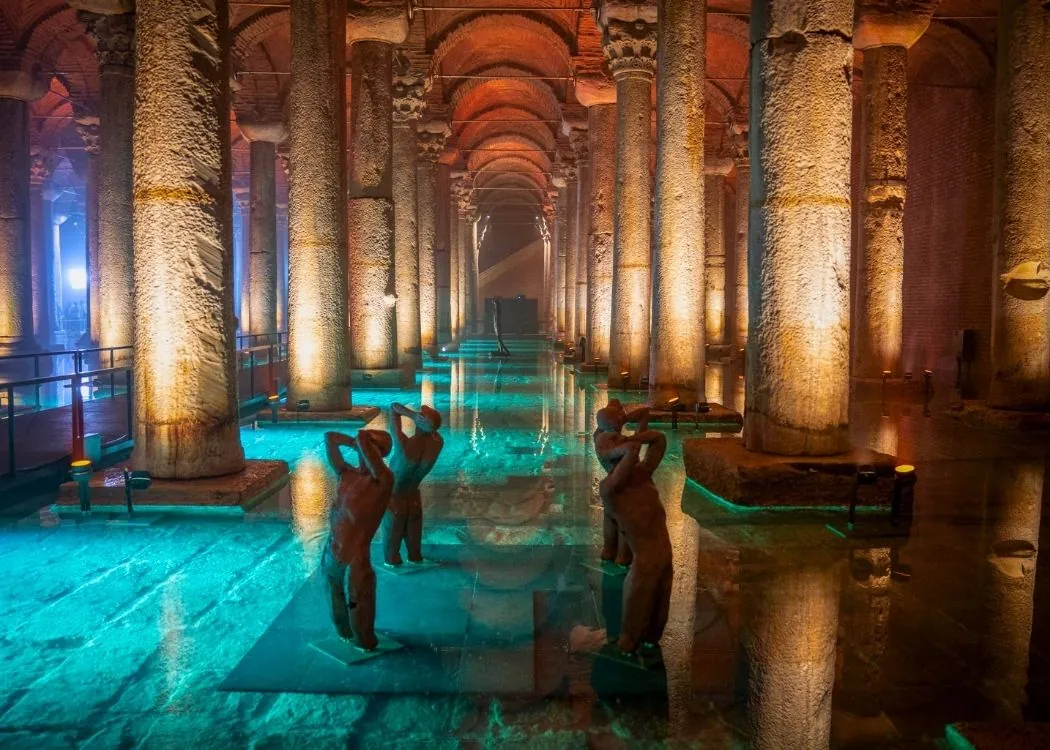
Walk a few blocks in any direction, and you might be standing over an empty pool built fifteen centuries ago. Some lie hidden beneath busy cafes. Others open their heavy doors for only a handful of visitors each day. Step inside and the heat of the street fades at once. Marble columns rise like tree trunks in the dim light, and droplets fall into forgotten wells. These places remind us that Constantinople needed fresh water as much as it needed high walls and golden churches. In the paragraphs that follow, we will leave the Basilica behind and slip into the silence of three lesser-known cisterns that still breathe beneath the city.


About Istanbul’s Hidden Cisterns


Long before tap water, emperors planned giant stone pools under Constantinople to keep the city alive during siege and drought. Aqueducts carried rain and river water from the hills outside the walls. Cisterns stored it in the cool dark underground. The best engineers of their age measured arches, counted bricks, and carved marble capitals that still hold weight after fifteen centuries. Today a few of these reservoirs sit open to curious eyes. Each one tells a chapter of the city’s long story.

istanbul_cisterns_tickets


Ancient Engineers at Work


The first builders used brick, mortar mixed with crushed terracotta, and thick layers of waterproof plaster. Columns recycled from older temples saved time and money. A forest of pillars spread the load so earthquakes could shake the ground without dropping the roof.


The Life of a Cistern


Water entered through narrow channels, settled to let silt sink, then moved out again through clay pipes. Lanterns hung above walkways for guards who checked the level each night. In plague years fresh water from these vaults saved whole districts. Read here the history of the Basilica Cistern to get a deeper understanding about the general cistern history.


Rediscovery and Restoration


Many cisterns fell silent after the Ottoman conquest. Shops rose above them. Some became storage rooms or silk workshops. Modern excavations in the 1960s and recent city projects cleaned the walls, strengthened columns, and added subtle lighting so visitors can see without harming the stone.


Why Visit Today


The silence under the streets gives a rare break from the city noise. Cool air rolls across still water. Light dances on brick arches. Stand in Binbirdirek and count the pillars, or watch the laser show ripple across the surface at Şerefiye. These places are museums of engineering, architecture, and resilience all at once.


The Cisterns One by One


Below are three underground chambers that keep their own character. One glows with modern lights, one stands raw and vast, and one hides in plain sight under a carpet shop. Visiting all three takes less than half a day and shows how many different faces a single city can wear.

istanbul_cisterns_tickets


Şerefiye Cistern (Theodosius Cistern)


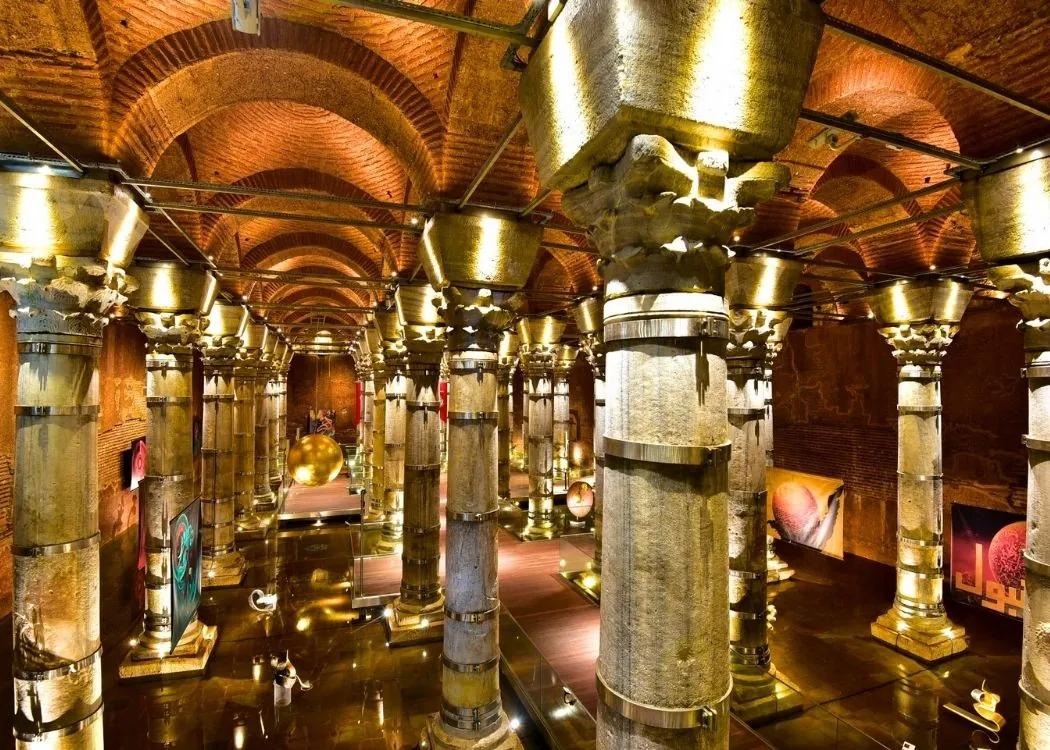
Walk two blocks west of the Hippodrome and a small glass cube marks the entrance. A lift drops you into a hall built for Emperor Theodosius II in the fifth century. Soft walkways cross a still mirror of water; every thirty minutes the walls turn into a screen for a twelve-minute light-and-sound show that paints Byzantine mosaics across the brick vaults. The Serefiye Cistern museum stays open daily from 9 a.m. to 7 p.m., and the cool air feels like natural air-conditioning on a summer day. 

istanbul_cisterns_tickets


Binbirdirek Cistern (Cistern of Philoxenos)


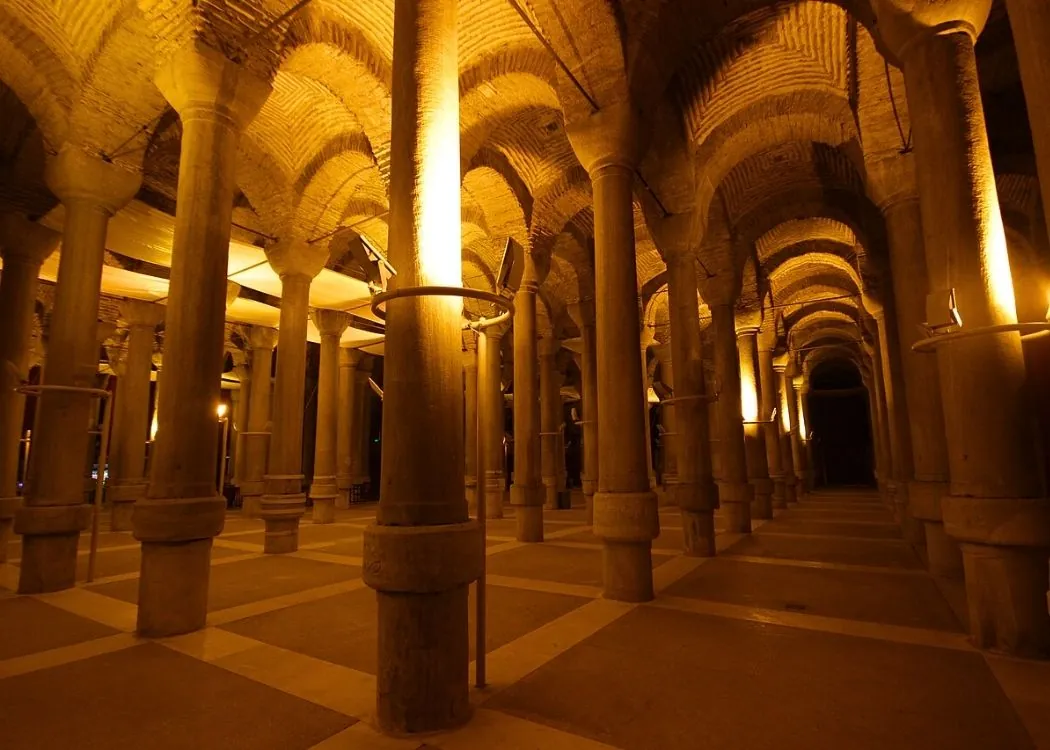
Step through an unmarked doorway near Sultanahmet Square and columns surround you like a stone forest. Built in the fourth century, this reservoir once held forty thousand tons of water. Today the floor is dry, the brick ceiling soars almost fourteen metres high, and concerts or art shows echo among 224 pillars. You might catch a whirling-dervish performance or a jazz night announced on posters at the entrance. Even when empty, the vast silence feels dramatic. 

istanbul_cisterns_tickets


Nakilbent Nakkas Cistern


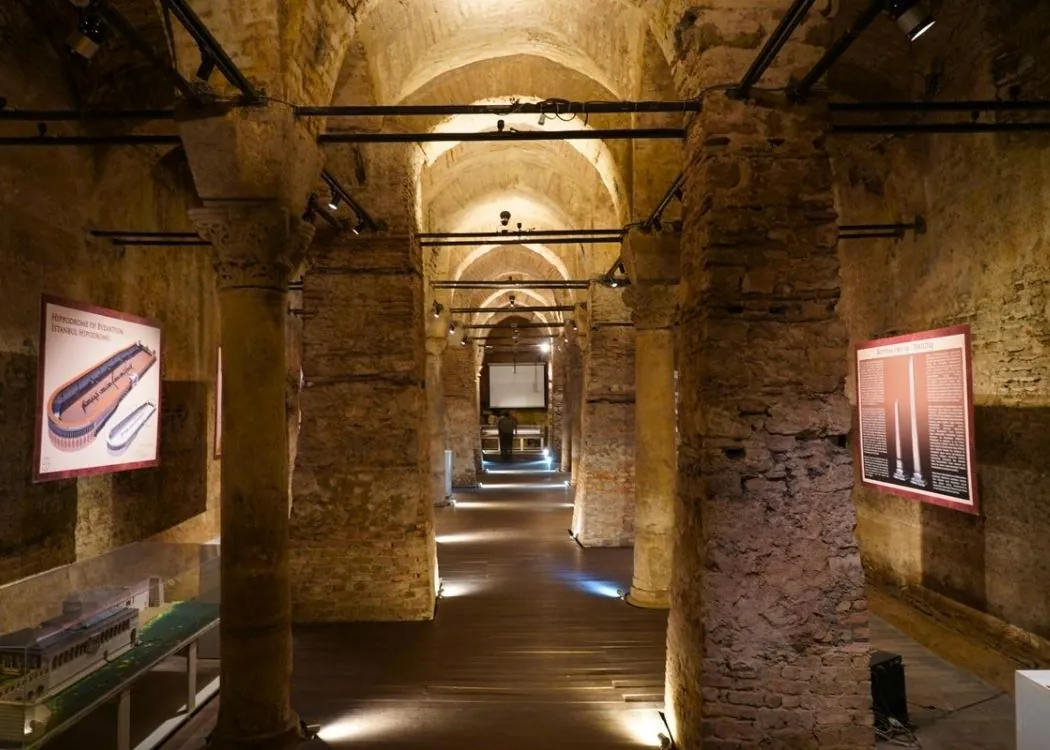
A short walk toward the Grand Bazaar, a carpet shop clerk lifts a trapdoor and invites you downstairs. A single staircase leads to a small tenth-century chamber lit by spotlights. Shards of Roman glass and tiny perfume flasks rest in display cases along the walls. The visit is free, though a polite look at the rugs upstairs is appreciated. Opening hours follow the shop, roughly 10 a.m. to 6 p.m., and most tourists pass by without ever knowing it is there.


Unlock Two Cisterns and a Whole City with Istanbul Tourist Pass®


When you finish wandering in the half-light of Şerefiye and Binbirdirek, keep your phone handy. Your Istanbul Tourist Pass® already holds skip-the-ticket-line entry and an audio guide for the Şerefiye (Theodosius) Cistern and the world-famous Basilica Cistern. Just scan the QR code at the door and step straight into the cool hush while the stories play in your ear. 

istanbul_cisterns_tickets


Those two vaults are only the beginning. The pass bundles 100-plus attractions and services across the city; everything from Hagia Sophia and Galata Tower to Bosphorus cruises, aquarium tunnels, airport shuttles, and guided walking tours. One digital pass, one fixed price, no paper tickets, no long queues. 


So spend your morning under ancient arches, surface for a cup of Turkish coffee, then keep exploring without opening your wallet again. The stones may be fifteen centuries old, but the easiest way to enter them is one tap away in your pocket.
What You're Wondering About

What exactly is a Byzantine cistern? expand_more
A cistern is an underground reservoir that stored fresh water for ancient Constantinople. Engineers lined the vaults with waterproof plaster and fed them through aqueducts so the city could survive siege, drought, and fire.
Which cisterns can I enter with Istanbul Tourist Pass®? expand_more
The pass covers skip-the-ticket-line entry to the Basilica Cistern and the Şerefiye (Theodosius) Cistern, plus an audio guide for both. Binbirdirek and Nakkaş require separate tickets, which you can buy at the door.
How long does a visit take? expand_more
Plan about 30 minutes for Şerefiye if you stay for the light show, 20–30 minutes for the Basilica Cistern, and another 20 minutes each for Binbirdirek and Nakkaş. Seeing all four at an easy pace fits into half a day.
What are the opening hours? expand_more
Şerefiye usually opens 9 a.m.–7 p.m. daily. The Basilica Cistern keeps similar hours but may extend to 10 p.m. in summer. Binbirdirek’s hours vary with events, and the Nakkaş Cistern follows its carpet shop (roughly 10 a.m.–6 p.m.). Check current times before you go.
When is the best time to avoid crowds? expand_more
Arrive at opening or after 5 p.m. on weekdays. Tour groups peak between 11 a.m. and 3 p.m., especially at the Basilica Cistern.
Is photography allowed inside? expand_more
Yes, hand-held photos are fine. Tripods or flash may be restricted, and video sometimes carries an extra fee at the Basilica Cistern.
Are the cisterns wheelchair or stroller friendly? expand_more
Şerefiye has an elevator and flat walkways. The Basilica Cistern has ramps but still includes some uneven flooring. Binbirdirek and Nakkaş rely on staircases and are not fully accessible.
What should I wear or bring? expand_more
The temperature underground stays cool year-round, so a light layer helps in summer. Floors can be damp; choose shoes with good grip. Bring a small tripod-free camera and leave bulky bags at your hotel.
Are children welcome? expand_more
Absolutely. Kids often enjoy the echo and mysterious lighting. Children under a certain age enter free at most sites; confirm the current age limit at the ticket desk.
Does the pass include anything else near the cisterns? expand_more
Yes. Istanbul Tourist Pass® bundles more than 100 attractions and services, including Hagia Sophia audio guides, Bosphorus cruises, and airport transfers, all within the same Pass!

Find more Istanbul inspiration

Eine kurze Geschichte des Galata-Turms
calendar_today Mar 6, 2021 6 min

Eine kurze Geschichte des Galata-Turms

Der Galata-Turm gehört zu den eindrucksvollsten Wahrzeichen Istanbuls. Von seiner privilegierten Lage überblickt er Beyoğlu und Karaköy.

Istanbul Do’s und Don’ts: 10 unausgesprochene Richtlinien, die jeder Istanbuler kennt
calendar_today Dec 18, 2023 7 min

Istanbul Do’s und Don’ts: 10 unausgesprochene Richtlinien, die jeder Istanbuler kennt

Istanbul ist eine Stadt, in der Vergangenheit und Gegenwart harmonisch zusammenfinden. Die lebhaften Märkte, historischen Wahrzeichen und die warme Gastfreundschaft ziehen Reisende an. Wenn Sie Ihre Reise durch diese bezaubernde Metropole antreten, ist es hilfreich, die unausgesprochenen Regeln zu kennen, die den Istanbul-Kulturalltag prägen. Begleiten Sie uns auf einer kulturellen Entdeckung, während wir die Do's und Don’ts enthüllen, die jeder Istanbuler kennt, und Ihnen Einblicke geben, die Ihr Erlebnis bereichern und Sie ins Herz dieser faszinierenden Stadt führen. Und zuerst das perfekte Werkzeug für Ihre Reise: Istanbul Tourist Pass®.

Istanbul-Biennale: Geschichte, Veranstaltungsorte & Guide 2025
calendar_today Nov 10, 2025 7 min

Istanbul-Biennale: Geschichte, Veranstaltungsorte & Guide 2025

Die Istanbul-Biennale ist das führende zeitgenössische Kunstereignis der Türkei und eine der weltweit bedeutendsten Biennalen. Gegründet von der Istanbul Foundation for Culture and Arts (İKSV) im Jahr 1987, erstreckt sie sich über mehrere Veranstaltungsorte im Stadtzentrum und ist frei zugänglich. Sie schlendern von historischen Schulen zu alten Hanen und Gebäuden am Wasser …

Umfassender Reiseführer zu Osmanischen Palästen in Istanbul
calendar_today Jun 10, 2025 8 min

Umfassender Reiseführer zu Osmanischen Palästen in Istanbul

Istanbul ist eine Stadt mit vielen Schichten. Vier osmanische Paläste prägen die Skyline: Topkapı, Dolmabahçe, Beylerbeyi und Yıldız. Der Istanbul Tourist Pass® macht Besuch und Tickets einfach und erspart Wartezeiten.

Eine kulinarische Zeitreise: 100 Jahre alte Restaurants, die Istanbul heute noch bedienen
calendar_today Jun 12, 2025 15 min

Eine kulinarische Zeitreise: 100 Jahre alte Restaurants, die Istanbul heute noch bedienen

Istanbuls Dining-Szene ist ständig im Wandel, doch einige ehrwürdige Lokale wirken wie lebende Zeitkapseln. Dort überdauern Rezepte ein Jahrhundert, die Einrichtung erinnert an Sultans und Paschas, und jeder Bissen trägt die Geschichte in sich. In dieser blogartigen Reise besuchen wir einige der ältesten, noch betriebenen Restaurants Istanbuls...

Gewürzbasar Istanbul entdecken im Jahr 2025
calendar_today May 18, 2025 4 min

Gewürzbasar Istanbul entdecken im Jahr 2025

Istanbul erwacht mit dem Rufen der Möwen und dem Klappern der Straßenbahnen. Die Stadtbrücken verbinden zwei Kontinente, doch alte Märkte wirken wie autofreie Zeitkapseln. Händler rufen in vielen Sprachen, während Aromen durch enge Gassen ziehen. Folgen Sie der Tram nach Eminönü und betreten Sie den Gewürzbasar, auch Mısır Çarşısı, wo Safran, Rosenblüten und Pul Biber glänzen.

Der perfekte 3-Tage-Plan für Istanbul: Ein unvergessliches Abenteuer
calendar_today Apr 25, 2025 5 min

Der perfekte 3-Tage-Plan für Istanbul: Ein unvergessliches Abenteuer

Erleben Sie Istanbuls ikonischste Attraktionen mit dem Istanbul Tourist Pass. Warteschlangen umgehen und eine reibungslose, unvergessliche Reise genießen. Jetzt Pass sichern und das Beste aus Ihrem Aufenthalt herausholen!

Istanbul per See erkunden: Ein Reiseführer zu Fähren und Seebussen
calendar_today Dec 3, 2025 11 min

Istanbul per See erkunden: Ein Reiseführer zu Fähren und Seebussen

Istanbul verbindet zwei Kontinente und bietet Kultur, Geschichte und atemberaubende Landschaften. Eine der besten Arten, die Stadt zu erleben, ist vom Wasser aus. Die Bosporus-Meerenge trennt Europa und Asia und ist eine zentrale Wasserstraße der Stadt. Von Bosporus bis Marmarameer bieten Fähr- und Seebus-Verbindungen eine einzigartige Perspektive. Entdecken Sie Fähren, Seebusse und Touren mit dem Istanbul Tourist Pass®.

Fruehling in Istanbul: Was man tun, sehen und essen kann
calendar_today Apr 27, 2025 6 min

Fruehling in Istanbul: Was man tun, sehen und essen kann

Mach deinen Fruehling in Istanbul unvergesslich, erlebe Highlights der Stadt im Frühjahr mit dem Istanbul Tourist Pass. Vermeide Wartezeiten und starte voller Vorfreude in deine Reise.

Alles, was Sie über die Istanbul Metro wissen müssen
calendar_today May 16, 2025 7 min

Alles, was Sie über die Istanbul Metro wissen müssen

Istanbul ist eine Metropole mit mehr als fünfzehn Millionen Einwohnern, verteilt auf Europa und Asien. Der Bosporus teilt die Stadt in zwei Hälften, und steile Hänge sowie enge Gassen formen viele Viertel, besonders die historischen Gegenden auf der Halbinsel. Die Metro ist hier mehr als ein Verkehrsmittel, sie ist das Rückgrat des Alltags.