
Before starting digging into the past, check out the 100+ amazing attractions, guided museum tours, and experiences you can join for a single price with Istanbul Tourist Pass®. Especially if you love history, you will enjoy our guided museum tours!
What is the Importance of Seven Hills?
Istanbul is well known as the City with seven hills. But that's not a geographically right definition. The ancient peninsula's hills were initially described by the Byzantines, who took their inspiration from Rome's seven hills. So, it is actually Rome, not Istanbul which was founded on seven hills. When Constantin the Great was moving the capital of the Roman Empire from Rome to Istanbul, he adapted the tale of seven hills to this city, as well as many institutions and foundations.
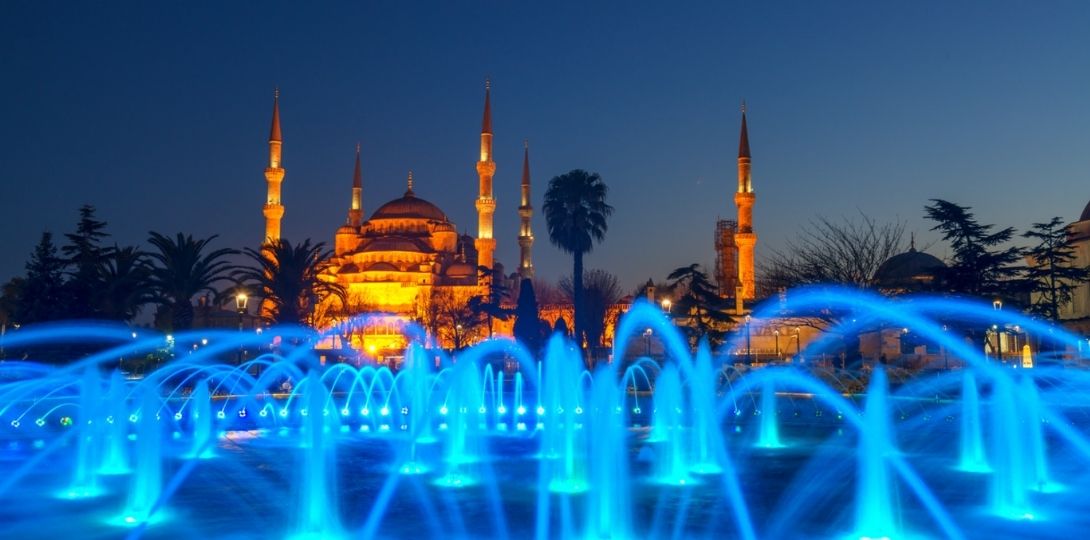
Thus the high locations around the Golden Horn were declared as the seven hills of Istanbul. These hills were ornamented by the Byzantines with temples, palaces, and forums. Mosques were first constructed in the city following the Ottoman conquest in 1453. Many cities throughout the world are known to be erected atop seven hills. Some of these are Mecca, Tehran, Barcelona, Edinburgh, Seattle, and Moscow. Rome and Istanbul are the most well-known of these cities, though, given the former was the first and the latter was the final capital of the Roman Empire.
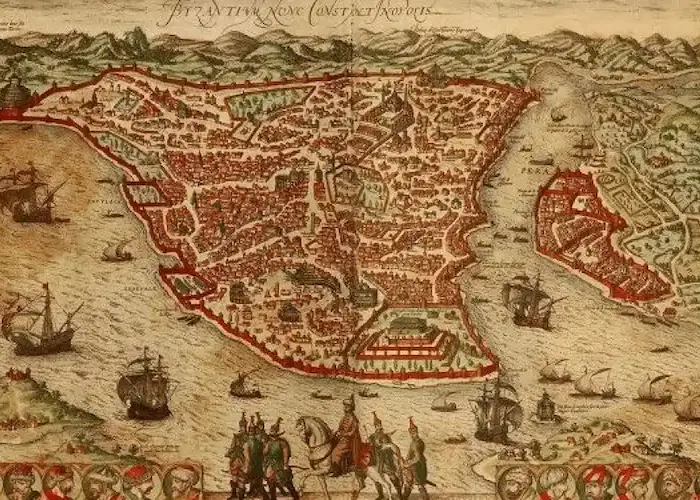
This is the region called the historical peninsula today. For centuries, when the city of Constantinople was mentioned, this limited area was mentioned. Compared to the most extreme borders that Istanbul has reached today, this area, which includes seven hills, constitutes a very small part of a big city.
What are the “seven hills” of Istanbul?
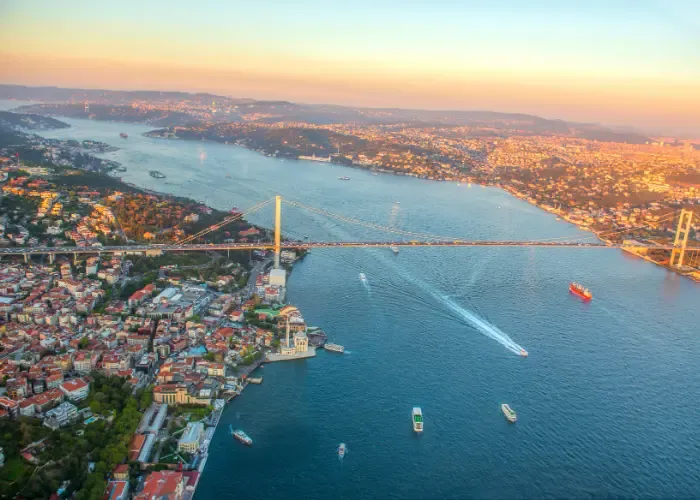
Where are the seven hills of Istanbul? These seven hills, which were clearly evident before the city was influenced by modern architecture, are located within the wall called "real Istanbul" or "historical Istanbul". Let’s have a look at the Seven Hills of Istanbul.
Hill 1st – Sarayburnu
From Seraglio Point, the first hill on which the ancient city of Byzantium was built, spans over the entire region that is home to Hagia Sophia, the Blue Mosque, and Topkapi Palace.
As today it is called, Sarayburnu, which sits at the very end of the old peninsula, is around 40 meters high. Here, Istanbul's conqueror Fatih Sultan Mehmet erected his palace. Following then, Topkapi Palace was the epicenter of an empire spanning three continents for 400 years. If one has not visited the Topkapi Palace, one cannot comprehend Istanbul or the Ottoman Empire.
Hill 2nd – Cemberlitas
The Nuruosmaniye Mosque, Grand Bazaar, and Column of Constantine are located on the second hill. A rather broad valley that originates from Babiali on the east Eminönü separates the second hill from the first hill. From Beyazit to Sultanahmet, a huge circular column known as the Cemberlitas or Constantine Column may be seen. It is well known that throughout the Roman and Byzantine eras, the Constantinople Forum—which served as the city's political and commercial hub—was constructed on the location of Cemberlitas.
Hill 3rd – Süleymaniye Mosque
The principal structures of Istanbul University, the Bayezid II Mosque, and the Süleymaniye Mosque are currently located on the third hill. The hill's southern slopes fall down to Kumkapi and Langa. The Suleymaniye Mosque is situated atop Istanbul's third hill. The mosque is regarded as a journeyman's design by the eminent architect Mimar Sinan. It is named after Suleiman, the Sultan who ruled during the height of the Empire's supremacy. The mosque is portrayed as the beautiful memory of the Empire spreading to three continents with many conquests in the famous poet Yahya Kemal's work "Feast Morning in Süleymaniye," which is about the mosque.
Hill 4th – Fatih Mosque
The fourth hill, which once hosted the Church of the Holy Apostles and later the Fatih Mosque, dips down somewhat steeply to Aksaray in the south and the Golden Horn to the north. The Church of the Holy Apostles was the second-most significant church in the city during the Byzantine era, after the Hagia Sophia. Additionally, there is a cemetery where the Byzantine emperors are interred. The destroyed cathedral was replaced with the Fatih Mosque and Complex after the city was taken over.
Hill 5th – Yavuz Sultan Selim Mosque
The Sultan Selim Mosque is located on fifth hill. The valley that descends on the west toward Balat on the shore of the Golden Horn divides the fifth and sixth hills. This hill, which dominates the Balat area, is situated on the rocky Golden Horn slopes. The Ecumenical Patriarchate building is close by and is situated in a historically non-Muslim district with lots of churches and synagogues all around. It is structured as a compound and contains many educational institutions, just like Fatih and Süleymaniye Mosques. Here is also where Sultan Selim's octagonal mausoleum is. A white robe can be seen by the Sultan's coffin's bedside.
Hill 6th – Mihrimah Sultan Mosque
Edirnekapi and Ayvansaray districts are located on the sixth hill. Its gentle slopes extend past the perimeter of the fortification walls. Theodosian Walls, which surround the old city, are near this hill, which marks the highest point of the peninsula. İt is situated in the Edirnekapi neighborhood of Karagümrük. This is where Mimar Sinan's Mihrimah Sultan Mosque, which he constructed for Suleiman the Magnificent's daughter.
Hill 7th – Kocamustafapasa Hill
The seventh hill, often referred to as the "dry hill" or Xrolophos in Byzantine times, stretches from Aksaray to the Theodosian Walls and the Marmara. Having three summits, it forms a triangle with apexes in Topkapi, Aksaray, and Yedikule. It is a broad hill. In contrast to the other six hills, Kocamustafapasa Hill is situated near the Sea of Marmara. Kocamustafapaşa Hill, which is over 60 meters above sea level and is situated between the Cerrahpaşa and Samatya districts, stretches from the Aksaray area to the Theodosian Walls and the Marmara Sea.
Now, let's dig deeper into how Istanbul (Constantinople with its historical name) was founded.
How was Constantinople founded?
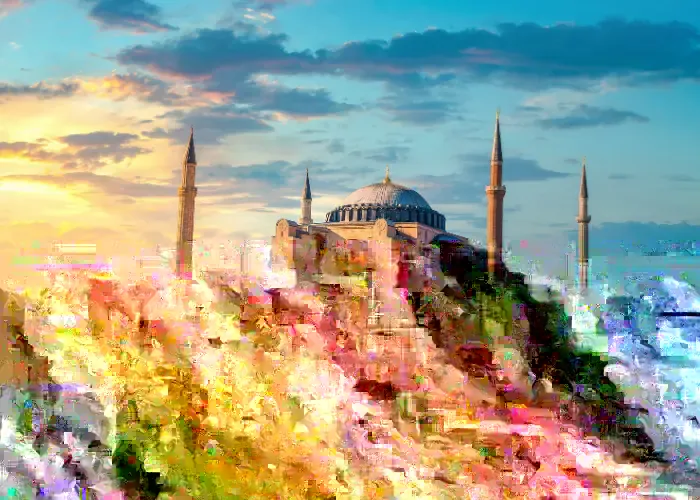
The Emperor Constantin 1st, or by his other name Constantin the Great thinks a lot about what happened due to the event known as the Migration of Nations in history, and anticipating the possible dangers, he searches for a new, safe, powerful, and centrally located capital for the ancient Roman Empire, which was in a difficult situation. (Actually, this search begins much earlier. Even Gaius Julius Caesar thought of moving the capital to Milan. The capital of Western Rome would be moved to Ravenna later.) Before Constantinople, Constantine the Great thought of Troy (Çanakkale) as the capital, but according to rumors, in one night's dream, God asked him for another capital.
Apart from Troy, undoubtedly, the most suitable city among the cities within the borders of the empire of that period is Augusta Antonina, that is, Istanbul, which was named Byzantium by Emperor Vespasian. There are many reasons for this.
-
being a transit point between Europe and Asia,
-
the possibility to reach the Mediterranean and therefore Africa via Istanbul,
-
the location makes it possible to control the Black Sea trade,
-
being suitable for agriculture and fishing, rich in terms of geographical and land features
-
being available for reconstruction
-
being in a dominant position to control both the Asian continent, the European continent, and the Middle East
-
being an ancient Greek city
The fact that the ancient Constantinople city center area has 7 hills just like ancient Rome and the silhouette of the city resembles an eagle (the symbol of Rome) also played a mystical role in this choice.
This city, called Nova Roma (New Rome) in Latin, was declared as the new capital of the Roman Empire on 11 May 330 AD, 65 years before the empire was divided into east and west. Even before the reconstruction of the city was completed, all important institutions such as the army, the senate, the treasury, etc. were moved here. A little over half a century later, it became the capital of the Eastern Roman Empire.
FAQ
Why is Istanbul called seven hills?
Historically, the old town, which is the first territory of the city, consisted of seven hills as in Rome. When Constantin the Great was moving the capital of the Roman Empire from Rome to Istanbul, he adapted the tale of seven hills to this city, as well as many institutions and foundations.
Why are the seven hills important?
Seven Hills is thought of as a sign of a city’s holiness.
Was Constantinople built on 7 hills?
Historically yes, but compared to the most extreme borders that Istanbul has reached today, this area, which includes seven hills, constitutes a very small part of a big city.
Does Istanbul have 7 hills?
İstanbul has many hills. Seven Hills signifies the first land city that originated.

.jpg)